Mango green tea with a clear tea finish
Make the fruit base separately, then control sweetness and dilution.
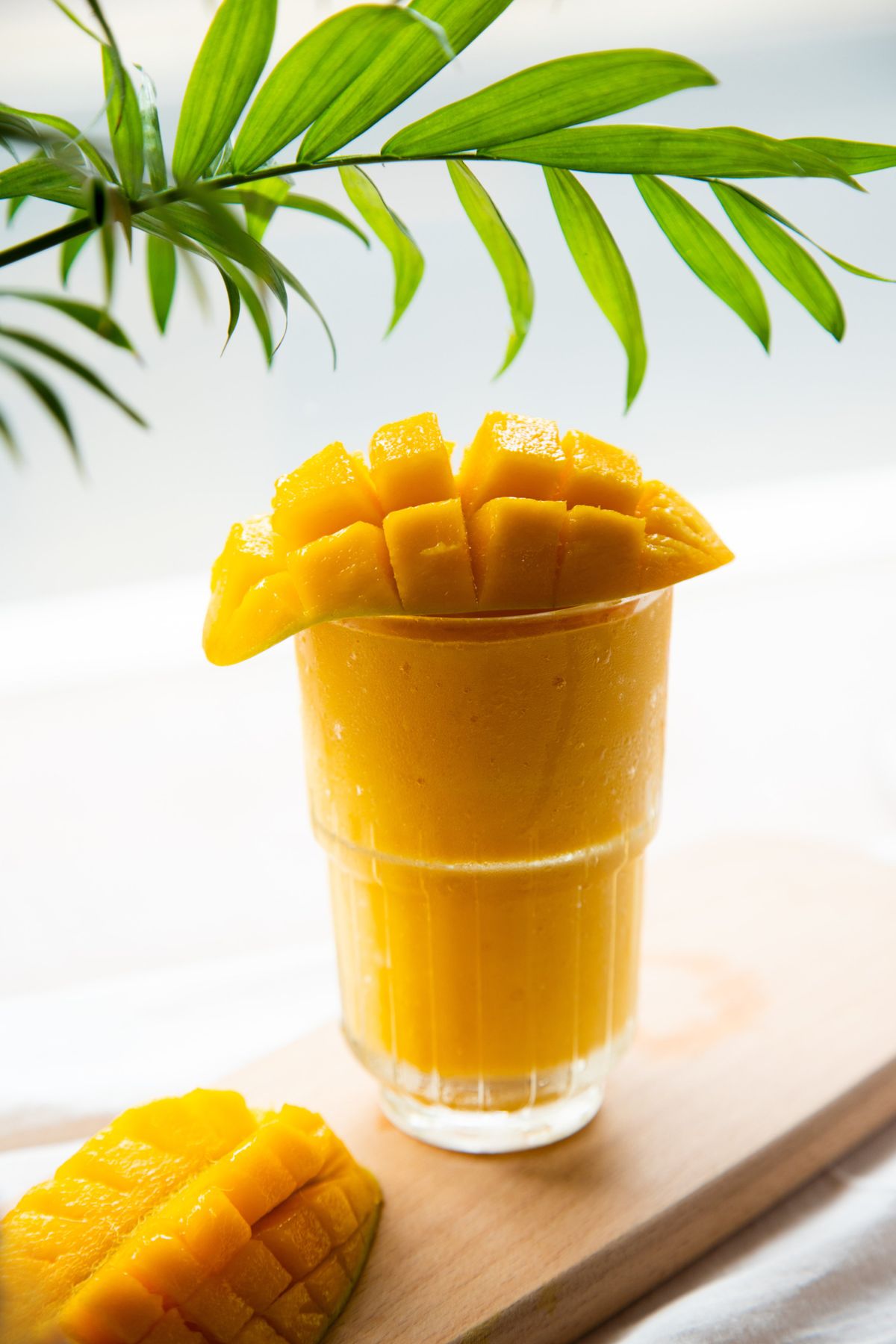
Illustrative stock photograph · Phạm Thành Đạt / Pexels · Photo credits
From ingredients to your next cup.
Follow the sequence. Select a step to read its full instructions.
- 01Prepare mangoRinse, cut safely and weigh usable flesh
- 02PureeCount any blending liquid in the tea allocation
- 03Brew & coolFollow the green tea package
- 04CombineFruit + tea, then syrup and measured ice
- 05AdjustChange texture, strength or sweetness separately
All sections in this guide
Gather one glass of ingredients
For an untested starting assembly, measure 160 ml cooled green tea, 50 g prepared mango flesh, 5 ml simple syrup and 60 g ice. Have extra cooled tea available if the puree makes the glass too thick. Use a clean knife, board, bowl, blender or fork, measuring jug and spoon.
Mango variety and ripeness change the result, so treat the fruit amount as a starting point rather than a promise of identical flavor.
Prepare the mango before blending
Rinse the whole fruit under running water before cutting. Put it on a stable board and keep fingers away from the knife. Remove flesh from around the flat pit and separate it from the skin.
The National Mango Board illustrates several cutting methods; choose one you can carry out comfortably. Weigh the usable flesh rather than the whole mango. Remove damaged portions and keep the prepared fruit and utensils clean.
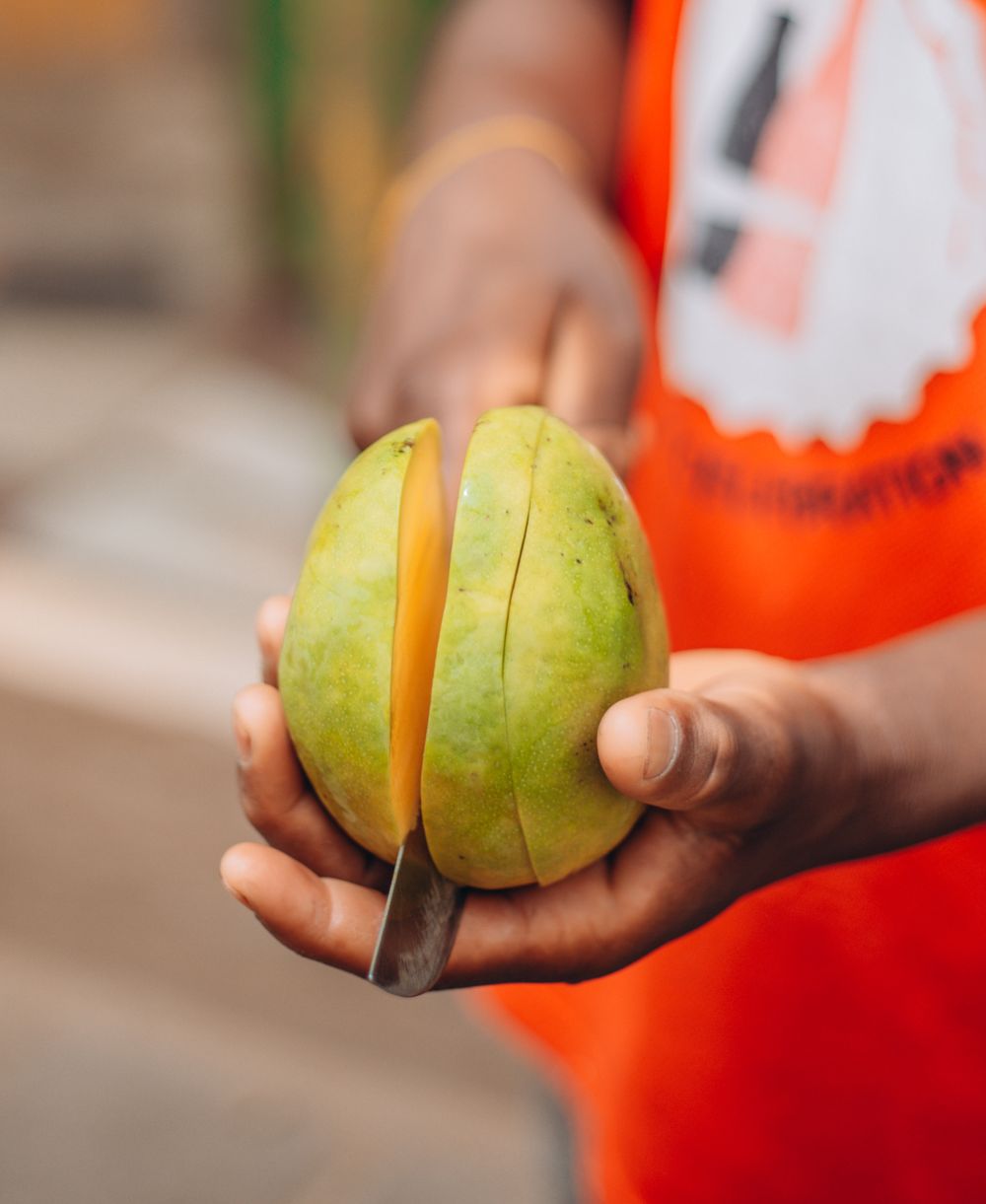
Cut the mango and separate the usable flesh from its skin and stone.Illustrative process photograph · MD Photography / Pexels. Equipment and ingredients may differ from this guide. Source & license
Build a fruit base without hidden water
Mash or blend the flesh separately. For a tiny batch, a fork may work better than a large blender. If you need liquid to move the blades, take a measured portion from the 160 ml tea allocation instead of adding an unrecorded splash of water.
Straining gives a different texture and yield; note how much puree reaches the glass. Do not expect a thick smoothie photograph to represent the appearance of a tea-based drink.
Brew and cool the tea
Follow the exact green tea package for dose, temperature and time. Strain or remove the bag fully. Cool in a clean vessel and measure the serving volume after cooling.
A black tea substitution changes the flavor and requires its own brewing instructions. Before mixing, taste a small cooled sample: harsh tea is better corrected at the brewing stage than concealed behind fruit and syrup.
Combine in stages
Stir mango into the cooled tea, then taste with a clean spoon. Add the proposed 5 ml syrup only if wanted, stirring before judging it. Add the weighed ice last.
If the drink feels too thick, compare a small measured addition of cooled tea rather than immediately adding more ice. Natural settling is expected; stir before drinking and before comparing two versions. Optional pearls need their own package-based preparation.
Adjust fruit, tea and sweetness separately
Too thick: use a little less puree in the next glass. Too little tea character: keep fruit and syrup fixed while reviewing the tea concentration. Too tart: compare fruit ripeness or a small syrup adjustment.
Too sweet: check whether the puree or milk alternative was already sweetened before changing the tea. A citrus addition is a separate experiment; do not add it automatically to every batch or assume all mangoes need the same correction.
Notes, substitutions and serving
Record the mango form, usable fruit weight, strained or unstrained preparation, tea identity and final syrup amount. Frozen mango must be handled as its package directs, and thaw liquid belongs in the dilution calculation. Commercial puree brings its own ingredient list and storage instructions.
Assemble near serving and refrigerate perishable components promptly. This guide does not establish a shelf life or claim that the finished drink matches the stock photograph.
A quick troubleshooting reference.
| What you notice | What to check next |
|---|---|
| Too thick | Compare less puree while holding tea and syrup fixed. |
| Too little tea | Review tea concentration before adding extra fruit. |
| Too tart | Check fruit ripeness and adjust syrup in small measured amounts. |
| Settling pulp | Stir before comparing; optionally test a strained portion. |
Sources & scope
These references support the specific preparation and handling topics described above. They do not establish that our proposed combinations have been kitchen-tested. Ingredient labels take priority.
- National Mango Board — preparing mangos
- National Mango Board — puree and handling FAQs
- Twinings — brewing guidance
- FDA — cleaning fruits and vegetables
- FDA — food storage and handling
Keep perishable ingredients refrigerated as directed. FDA guidance gives a two-hour room-temperature limit for foods needing refrigeration, or one hour above 90°F, and a refrigerator temperature of 40°F or below. This is not a validated shelf life for an assembled drink.
Keep exploring
Questions or corrections? Email the editor.