Brown sugar milk tea, one sweet layer at a time
Separate the pearl coating from the sweetness of the whole glass.
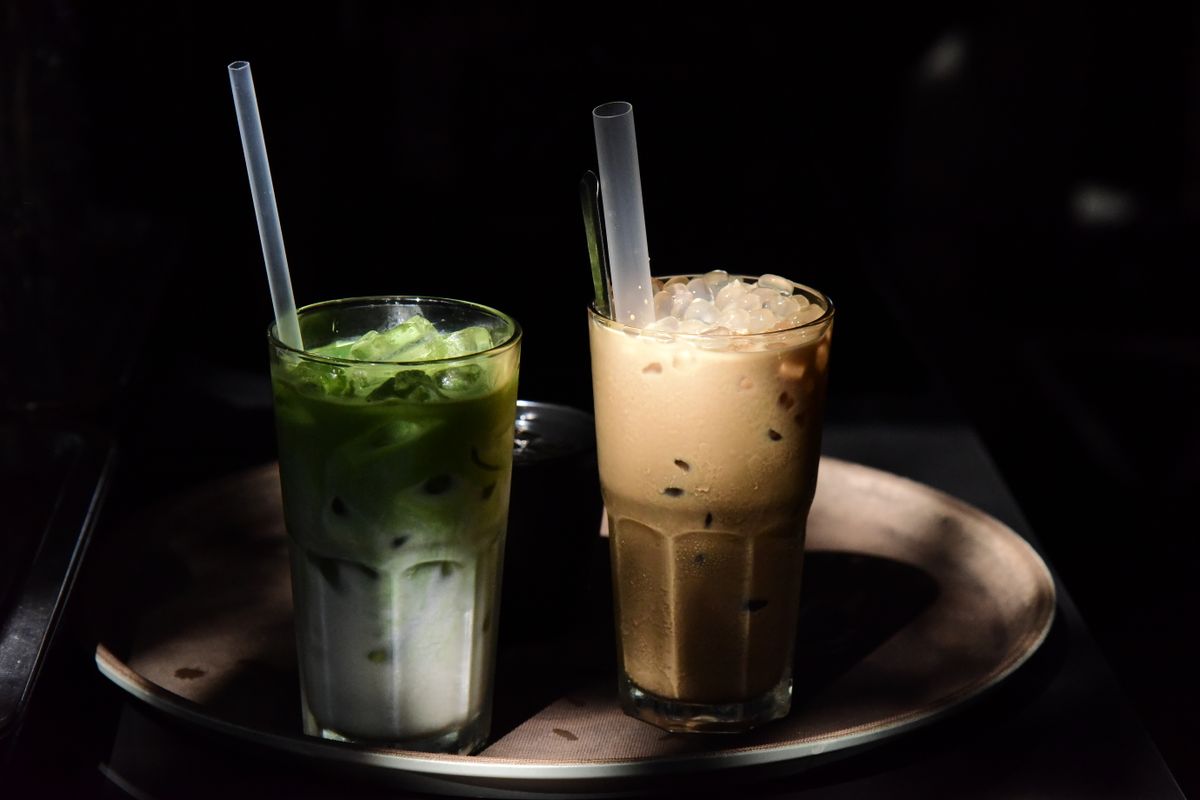
Illustrative stock photograph · Sóc Năng Động / Pexels · Photo credits
Six steps, one clear process.
AI-generated process illustrations, created specifically for this guide. They show the sequence, not a kitchen-tested result. Use the written quantities and ingredient directions; pictured scales, timers and packaging are illustrative.
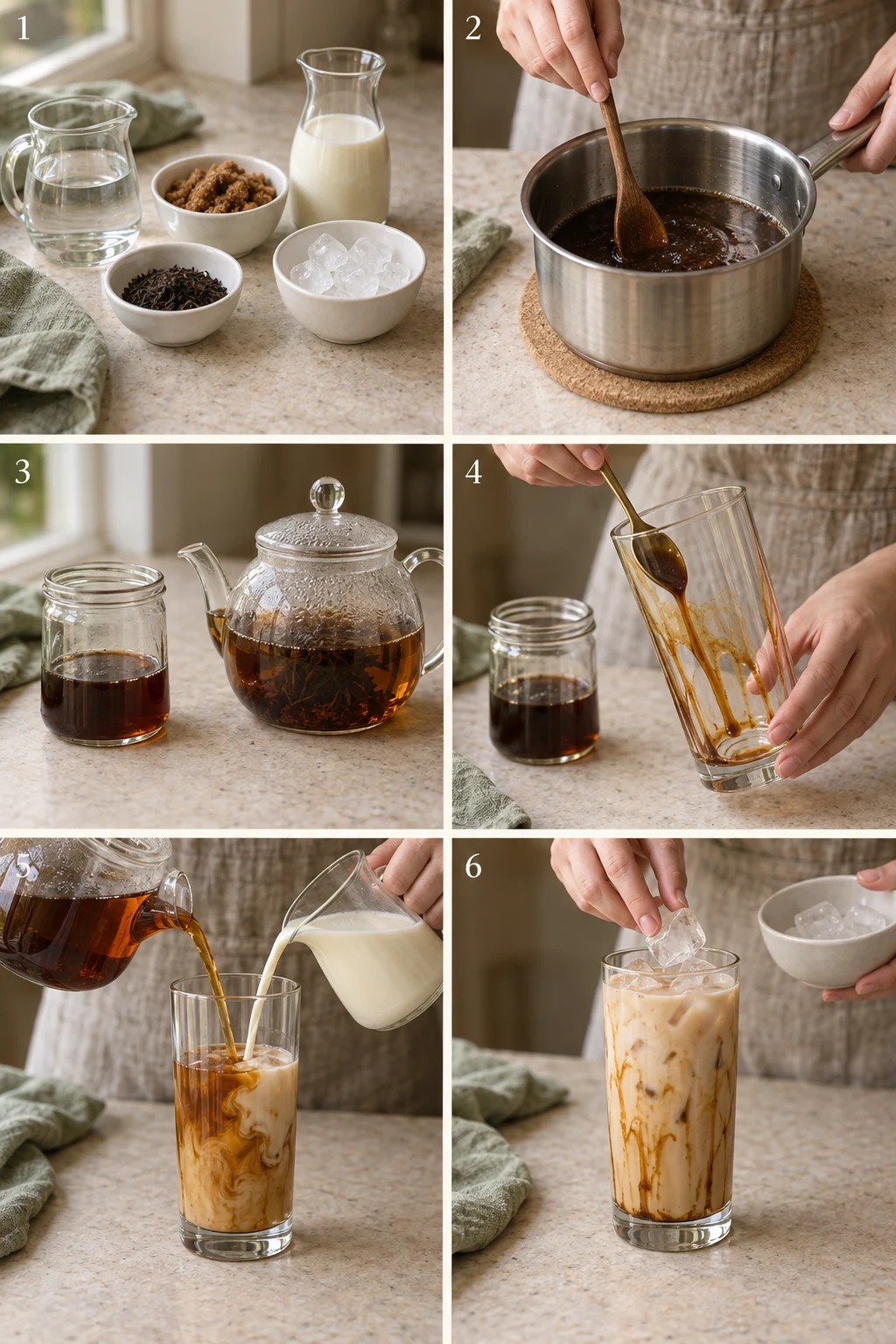
STEP 01 Measure separate components
Set out brown sugar, water, brewed tea, milk and ice as distinct ingredients.
Read the detailed guidance ↗STEP 02 Dissolve the brown sugar
Prepare the measured syrup gently instead of reducing it by prolonged boiling.
Read the detailed guidance ↗STEP 03 Cool syrup and prepare tea
Cool the syrup and brew the tea separately. Optional pearls follow their own package.
Read the detailed guidance ↗STEP 04 Use a measured coating
Swirl a small measured syrup portion inside the glass and count it toward total sweetness.
Read the detailed guidance ↗STEP 05 Combine cooled tea and milk
Add the cooled tea and milk, then taste before adding more sweetener.
Read the detailed guidance ↗STEP 06 Add ice and compare
Add measured ice. Adjust coating and liquid sweetness separately on the next trial.
Read the detailed guidance ↗
All sections in this guide
Ingredients for one proposed glass
Set out 150 ml cooled black tea, 100 ml cold milk, 60 g ice and up to 10 ml brown-sugar syrup. Prepare optional pearls according to their package and allow extra glass capacity. This is an untested assembly proposal.
The syrup formula and any sweetened topping affect the result, so record both instead of assuming every brown-sugar product has the same concentration. Use a glass large enough to stir without spilling.
Prepare the syrup deliberately
For a small proposed batch, weigh 50 g brown sugar and 50 g water. Warm gently in a small saucepan and stir until dissolved, then cool in suitable heat-safe equipment. Avoid a long hard boil, which changes concentration through evaporation.
This is a weight-based formula; a recipe using equal cup volumes is different. Make a small amount and follow suitable handling guidance rather than assigning an untested storage life.
Brew a base that can carry milk
Follow the exact tea label for dose, water temperature and steep time. Measure the cooled tea before assembly. If its flavor disappears after milk is added, compare a modest increase in leaf dose or a different tea-to-milk ratio next time.
Do not extend brewing indefinitely in an attempt to overpower sweetness. Taste a cooled sample of the base first so bitterness is not confused with a problem caused by the syrup.
Treat pearls as their own timed task
Read the package’s cooking, resting, rinsing and holding directions before heating water. Prepare only the amount you intend to serve. If the maker calls for a sweet coating, use a measured portion of the syrup and count it toward the drink’s total sweetness.
A glossy topping is not evidence that its center is ready; use the product’s completion guidance. Do not copy the cooking time of another brand.
Assemble without committing all the sugar
Place prepared pearls in the glass if using them. Add the cooled tea and cold milk, then a small measured portion of syrup. Stir and taste with a clean spoon before adding more.
Add ice last. A syrup streak on the glass is optional decoration; it does not replace mixing the drink before judging sweetness. Keep syrup left in the measuring vessel out of the calculation unless it actually enters the drink.
Adjust the coating and the drink separately
If the pearls taste pleasant but the liquid is too sweet, reduce syrup added directly to the tea rather than automatically removing the pearl coating. If the liquid tastes balanced but the tea is faint, adjust tea concentration next time while keeping milk and syrup fixed. If it tastes watery after standing, first cool ingredients more completely and measure ice consistently.
These are proposed comparisons rather than results of our own kitchen testing.
Questions and a useful record
Can you use white sugar? Yes as a separate variation, but the flavor and color change. Can you use a plant drink? Check the actual label, sweetness and allergens. Do you need to caramelize the sugar? This guide does not require caramel-making or describe its hotter cooking process.
Save the tea identity, brew method, milk amount, syrup weights and final syrup dose. That record is more useful than judging a drink by the darkness of its photographed stripes.
Sources & scope
These references support the specific preparation and handling topics described above. They do not establish that our proposed combinations have been kitchen-tested. Ingredient labels take priority.
- Twinings — brewing guidance
- King Arthur Baking — syrup recipe and measurement example
- Bossen — Express Cook Big Tapioca: exact-product directions
- FDA — food storage and handling
Keep perishable ingredients refrigerated as directed. FDA guidance gives a two-hour room-temperature limit for foods needing refrigeration, or one hour above 90°F, and a refrigerator temperature of 40°F or below. This is not a validated shelf life for an assembled drink.
Keep exploring
Questions or corrections? Email the editor.