Coffee boba with a measured phin base
Build the coffee first, then decide what milk and pearls should add.
Illustrative stock photograph · Mikhail Nilov / Pexels · Photo credits
From ingredients to your next cup.
Follow the sequence. Select a step to read its full instructions.
- 01Choose a methodMatch the coffee guide to the phin size
- 02BrewUse a secure filter and a heat-safe cup
- 03Prepare pearlsFollow the exact package on a separate timeline
- 04Cool & combineCoffee + milk; add condensed milk gradually
- 05AdjustKeep the brew fixed while comparing milk or sugar
All sections in this guide
Choose the coffee and the brewer
Use a phin and coffee with a preparation guide appropriate to that filter size. A small phin and a larger family brewer do not share one universal dose. Have a heat-safe cup, scale or suitable measure, timer, clean spoon and larger serving glass ready.
Nguyen Coffee Supply publishes phin brewing guidance and troubleshooting. Follow the full method for your equipment rather than taking a coffee quantity from an unrelated espresso recipe.
Separate the components
Prepare coffee, milk, optional sweetened condensed milk, optional pearls and ice as independent components. A proposed first assembly is 60 ml prepared cooled coffee, 100 ml cold milk and 60 g ice, with up to 10 g condensed milk added gradually. These amounts are an untested starting point, not the coffee producer’s recipe.
Condensed milk supplies sweetness as well as dairy, so additional syrup is not automatically needed.
Brew into suitable equipment
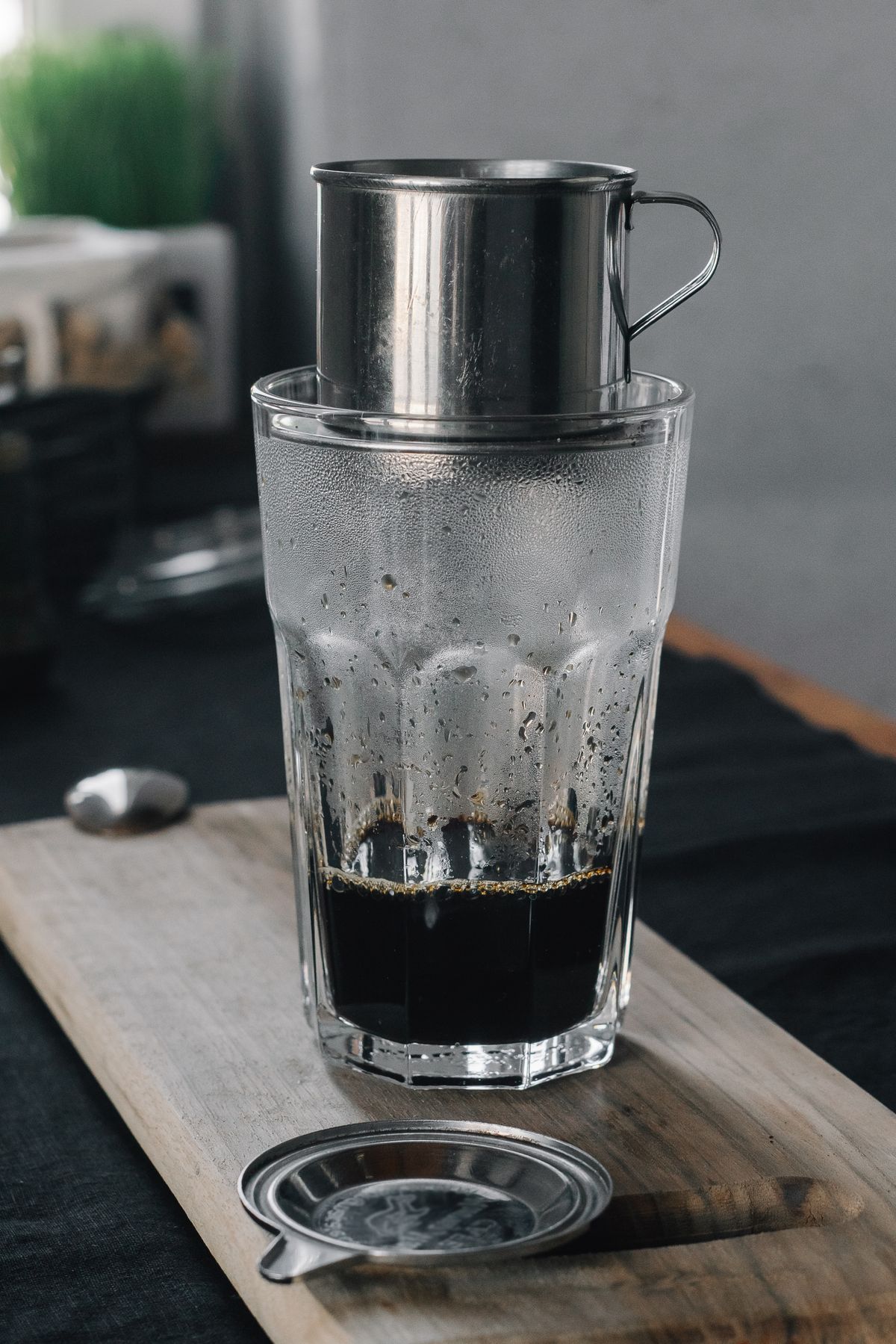
Set the phin securely over a heat-safe cup. Follow the maker’s coffee dose, bloom, water and filter-placement instructions. Avoid disturbing the brewer while it contains hot water.
Record the coffee and water amounts and the resulting brewed volume. If the flow is unexpectedly fast or stalled, review the producer’s grind and filter guidance before improvising pressure on a hot filter. Do not treat a particular drip time as a universal test of good coffee.
Brew the coffee base separately before adding milk and ice.Illustrative process photograph · Mikhail Nilov / Pexels. Equipment and ingredients may differ from this guide. Source & license
Prepare pearls on a separate timeline
If using pearls, follow the exact product’s cooking and holding instructions. A sweet coating affects the assembled drink, so keep a note of what enters the glass. Make the coffee early enough to cool without leaving the finished topping waiting beyond its serving guidance.
Use a glass with room for both the liquid and the topping. Coffee does not replace the pearl product’s directions or make an assembled milk drink shelf-stable.
Cool, combine and taste
Cool the prepared coffee in a clean suitable vessel. Stir in cold milk, then a small measured amount of condensed milk if desired. Taste with a clean spoon before adding more sweetness.
Add prepared pearls if using them, account for their coating, and finish with the weighed ice. Stir before drinking. Decorative coffee-and-milk layers are not a reason to judge the balance before the components are mixed.
Diagnose the dominant flavor
If milk overwhelms the coffee, compare a small reduction in milk while holding the brew method steady. If the coffee tastes unpleasant before milk, address the brew first. If sweetness dominates, reduce condensed milk or the topping’s added syrup in a controlled comparison.
A different roast or plant drink is a new version. This guide does not estimate caffeine or make a claim that a coffee drink is suitable for every reader.
What can be substituted?
A different coffee brewer can be used, but prepare its coffee according to its own maker’s method and record the volume used. A plant drink changes texture, sweetness and allergen considerations; show guests the actual label. Omitting pearls simplifies the timing and removes one source of sugar.
Refrigerate perishable ingredients promptly and assemble near serving. Our stock photograph illustrates phin equipment, not a tested preparation of this proposed drink.
A quick troubleshooting reference.
| What you notice | What to check next |
|---|---|
| Coffee overwhelmed | Compare less milk with the coffee preparation unchanged. |
| Unpleasant coffee base | Review the brewer’s method before adjusting the assembled drink. |
| Too sweet | Count condensed milk and any syrup coating on pearls. |
| Flow stalls | Consult the phin producer’s grind and filter instructions. |
Sources & scope
These references support the specific preparation and handling topics described above. They do not establish that our proposed combinations have been kitchen-tested. Ingredient labels take priority.
- Nguyen Coffee Supply — phin brewing guide
- Bossen — Express Cook Big Tapioca: exact-product directions
- FDA — food storage and handling
Keep perishable ingredients refrigerated as directed. FDA guidance gives a two-hour room-temperature limit for foods needing refrigeration, or one hour above 90°F, and a refrigerator temperature of 40°F or below. This is not a validated shelf life for an assembled drink.
Keep exploring
Questions or corrections? Email the editor.